
cheapest way to call internationally
The Cheapest Way to Call Internationally A Practical Guide

Let's get right to it. If you want the absolute cheapest way to call internationally, you need to be using a Voice over IP (VoIP) service. More specifically, a browser-based one.
Why? Because these services route your calls over the internet, completely bypassing the old-school, expensive phone networks. The result is a massive drop in per-minute rates, making it affordable to connect with anyone, anywhere, without sacrificing call quality.
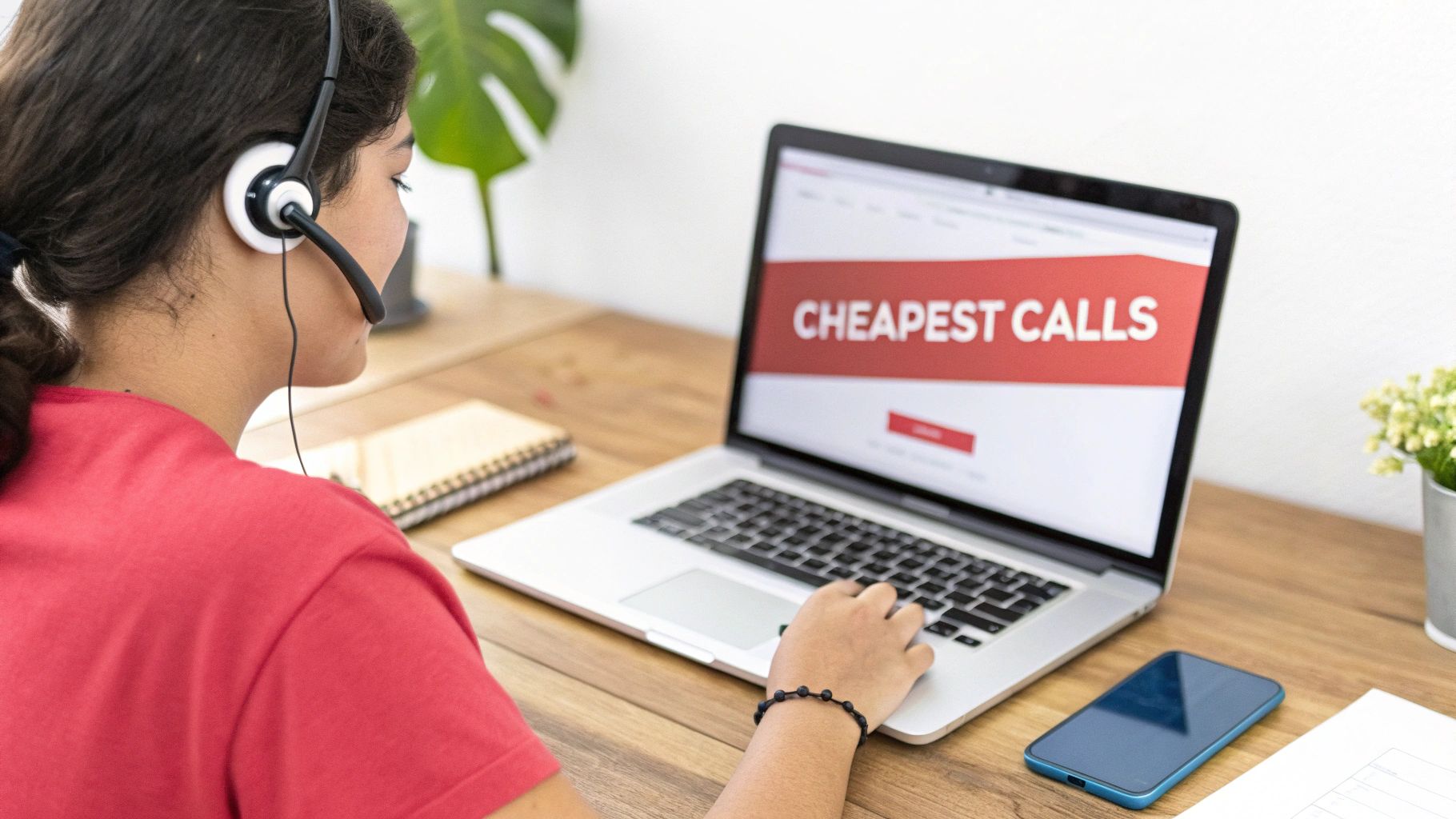
Remember the days of getting a phone bill and feeling that pit in your stomach after just one long call overseas? For decades, legacy phone companies had a monopoly on international communication, and they charged a fortune for it. You were stuck with confusing calling cards, pricey monthly add-ons, and sky-high rates just to talk to family or clients abroad.
Thankfully, those days are over. The game has totally changed.
Modern VoIP services like YodelPhone have made international calling ridiculously cheap and accessible. By using the internet connection you already have, these tools sidestep the old, expensive infrastructure. That translates directly into huge savings for you.
The financial impact is pretty staggering when you look at the numbers.
Think back to the early 2000s. A call from the US to the UK on a traditional landline could easily cost you 50 cents to a dollar per minute. A simple half-hour chat would land you a $30 bill.
Fast forward to today. VoIP has slashed those costs by over 90% in many cases. Some pay-as-you-go plans offer rates as low as 0.29¢ per minute to Mexico. You can dig into how these apps have driven down costs over at Tech.co.
The whole model is different. You're no longer paying for the physical distance of the call. You're just paying for the tiny bit of data it uses. This completely shatters the old pricing structure.
To give you a clearer picture, here’s a quick rundown of your options.
This table breaks down the most common ways to call internationally, showing what you can expect to pay and who each method is really for.
| Calling Method | Typical Cost | Best For |
|---|---|---|
| VoIP (Browser-Based) | $0.01 - $0.20 / minute | Almost everyone—individuals, businesses, travelers. The most flexible and affordable option for calling any phone. |
| Mobile Carrier Plans | $5-$15 / month + per-minute fees | Occasional callers who value convenience and don't mind paying a premium to use their existing carrier. |
| Physical Calling Cards | $0.05 - $0.25 / minute (plus hidden fees) | People without reliable internet or smartphones, but watch out for connection fees and expiring minutes. |
| App-to-App (e.g., WhatsApp) | Free (with data) | Calling other users of the same app who have a smartphone and a stable internet connection. Can't call landlines. |
| Local SIM Card | Varies by country (often prepaid) | Long-term travelers or expats who need a local number and plan for both calls and data within a specific country. |
As you can see, for sheer cost-effectiveness and flexibility, VoIP services are in a league of their own.
This isn't some complicated tech for IT experts. It’s a dead-simple tool for just about anyone. The beauty of browser-based platforms is that there's nothing to download or install.
At the end of the day, finding the cheapest way to call internationally is about leaving outdated, expensive methods behind and embracing the power of the internet.
Before you start hunting for the absolute lowest per-minute rate, let's take a step back. The smartest move is to figure out what you actually need. Finding the cheapest way to call internationally isn't about some magic, one-size-fits-all service; it's about matching your unique calling habits to the right tool.
What works for a small business with clients scattered across the globe is going to be total overkill for someone just trying to call their parents in Mexico once a week.
So, start by asking yourself a few basic questions. How often are you really picking up the phone to call abroad? Is it a daily part of your job, or a casual weekend check-in with family? The frequency alone is a massive factor in deciding whether a simple pay-as-you-go service or a monthly plan makes more sense.
Next, get specific about who and where you're calling. Are most of your calls going to one country, like India or the UK? Or are you dialing numbers across multiple continents? Rates can swing wildly from one country to the next, and even between a landline and a mobile number in the same city. Knowing this is key to making a fair comparison.
Finally, what kind of calls are you making? Are you trying to reach a real, traditional phone number? Or are your contacts mostly on apps like WhatsApp? While app-to-app calls are free, they have one giant catch: you can’t use them to call a landline or a basic cell phone.
This is a dealbreaker if you need to call a hotel, a local business, or a relative who isn’t glued to a smartphone. It's a frustrating surprise for many people when they realize popular messaging apps can’t call landlines right when they need to the most.
By pinning down your usage upfront, you stop yourself from paying for features you'll never touch. A freelancer might just need a dead-simple, pay-as-you-go service, while a remote team could get a lot more value from shared credits and team management tools.
Let's look at how different needs point to completely different solutions.
Each of these people has a different "cheapest" option. By taking just a few minutes to map out your own needs, you can skip the guesswork and pick the right tool that saves you money from the very first call.
It’s time to cut through the noise. To find the cheapest way to make international calls, you have to look past the slick marketing and compare the real-world costs of your main options.
Let's break down the old-school methods—mobile carriers and physical calling cards—and stack them up against modern VoIP services to see who really comes out on top.
Your mobile carrier’s international add-on is tempting. It’s convenient, sure, but that convenience comes at a premium. These plans usually tack on a fixed monthly fee to your bill and might even lock you into a contract. If you only call abroad occasionally, this is almost never the cheapest route.
And what about those physical calling cards you see at the checkout counter? They seem cheap upfront, but they’re notorious for hidden fees, terrible connection quality, and minutes that mysteriously expire. Connection fees alone can eat up a huge chunk of the card's value before you even say hello, making them a frustrating and often misleading choice.
The right choice really depends on how you call, who you call, and why.

As you can see, a one-size-fits-all approach just doesn't work. The "cheapest" method is all about your specific calling habits.
This is where the real savings happen. Voice over IP (VoIP) services, especially browser-based platforms like YodelPhone, use a completely different playbook. By using your internet connection to make calls, they slash costs dramatically.
Forget contracts. The model here is a transparent, pay-as-you-go system. You add credits when you need them and only pay for the minutes you actually use. This gives you total control over your spending, with per-minute rates that are often just a fraction of what traditional carriers charge. Our guide to the best international calling apps dives deeper into why these solutions are so much more effective.
Let's look at some real numbers. For businesses, the savings can be massive. One analysis found that companies can save over $30 monthly per line—that's more than $360 a year for each employee—just by switching from legacy landlines to VoIP. For personal callers, the math is just as good. For example, some VoIP services offer calls to Mexico for as low as 1.2¢ per minute, a huge drop from traditional rates.
To see how this plays out in a real-world scenario, here’s a quick cost breakdown for calling a landline in the United Kingdom from the US.
| Service Type | Example Provider | Average Cost Per Minute |
|---|---|---|
| VoIP Service | YodelPhone | ~$0.01 - $0.03 |
| Mobile Carrier Add-On | Major US Carrier | $0.10 - $0.25+ |
| Physical Calling Card | Generic Prepaid Card | $0.05 - $0.20 (plus fees) |
The numbers don't lie. While older methods chip away at your budget with high rates and sneaky charges, a quality VoIP service offers straightforward, low-cost pricing that puts you back in control. It's simply the smarter, more modern way to stay connected globally.
After sifting through the options, it's pretty clear that browser-based VoIP is the simplest and cheapest way to call internationally. But how fast can you actually get going?
The answer: less than a minute.
Seriously. Services like YodelPhone are built to get you calling immediately. That means no downloads, no contracts, and no clunky setup. You can go from reading this guide to making your first call in the time it takes to grab a coffee.
Most modern services give you a free trial right away, letting you test the call quality without even pulling out your wallet. It's a no-risk way to see the savings for yourself.
The entire process is designed for speed. All you need is a device with a web browser—your laptop, tablet, or phone will do just fine.
Forget about downloading another app or installing software that hogs your computer's resources. Everything happens right inside your browser window.

The interface is clean and simple, focused on one thing: placing a call.
Once your free trial is up, you just add credits to your account. This is where the pay-as-you-go model really shines. You're not locked into a monthly subscription or a minimum spend.
Need to make a quick five-minute call? Add a few dollars and you're set. Running a business and making frequent calls? Top up with more.
You are in complete control of your spending. This flexibility is a massive advantage over traditional carrier plans that often bill you for services you barely touch.
Once you have credits, making a call is as easy as typing a number. Here’s how it usually works:
Because the service is cloud-based, you can log in and make calls from any device, anywhere you have internet. Your call history and contacts sync automatically, giving you a seamless experience whether you’re at your desk or on the move.
For a deeper dive into the mechanics, check out our guide on how to make international calls with these modern tools.
Beyond just being cheap, these platforms offer powerful features that make communication easier and more professional.
These features transform a simple calling tool into a proper communication hub. By ditching outdated methods, you not only find the cheapest way to call internationally but also gain a more efficient and flexible system for staying connected.
Choosing a low-cost VoIP service is the biggest win, but the savings don’t have to stop there. Once you’re set up, a few smart habits can stretch your calling credits even further.
Think of it like buying a fuel-efficient car. You made a smart choice, but how you drive still impacts your mileage. Same idea here.
A simple yet powerful habit is to check per-minute rates before every call. This sounds tedious, but it literally takes five seconds and can save you from a nasty surprise.
For example, calling a landline in Germany might be a dirt-cheap $0.02 per minute, but dialing a mobile number in that same city could jump to $0.15 per minute. That difference adds up fast, especially on a longer chat. A quick glance is always worth it.
Most services have little perks that reward you for using the platform. Keep an eye out for referral programs that give you—and your friends—free calling credits. Sharing a simple link is often all it takes to add a few extra bucks to your account.
Also, get familiar with your service’s call analytics dashboard. This isn't just for big businesses; it’s an amazing personal budgeting tool.
By checking your call history once in a while, you can see exactly where your money is going. You might find you spend more than you realized calling one specific country, which can be a good reminder to keep those calls a bit shorter.
This data helps you spot your own calling patterns and make smarter choices to keep those costs down. It’s all about being proactive with your spending.
If you’re making international calls for work, a few extra tricks can make a huge difference. The goal here isn’t just about saving a few bucks, but also making it easier for clients and partners to connect with you.
Here are a few game-changing tips for business use:
These aren't just tips; they're strategies that turn your calling service from a simple expense into a smart business tool. By paying attention to the details, you ensure every cent you spend on global communication is working for you.
Making the switch to a new way of calling can bring up a few questions. You're probably wondering about call quality, hidden fees, and whether this will actually work for calling your grandmother's old landline.
Let's tackle some of the most common concerns right now so you can make your first call with total confidence.
Worried about call quality? We all remember those choppy, delayed internet calls from a decade ago. Thankfully, technology has come a long way. As long as you have a stable internet connection—even just a regular mobile data signal—your calls will be perfectly clear.
And no, you don't need any special equipment. Browser-based services work right from your laptop, tablet, or smartphone. Your device's built-in mic and speakers are all it takes.
Yes, and this is the most important difference between a true VoIP service and free apps like WhatsApp or FaceTime. Those apps are great, but they have one huge catch: the person you're calling must have the exact same app installed.
That’s a dealbreaker for millions.
A proper international calling service lets you call any real phone number in the world. It doesn't matter if it's a landline in a rural village or a basic flip phone that can't even connect to the internet. This is the only way to reliably reach businesses, hotels, or older relatives who don't use smartphones.
If you've ever used a physical calling card, you know the frustration of hidden fees. They'd advertise a low rate, then hit you with "connection fees" or "maintenance charges" that would mysteriously drain your balance.
That's exactly what a modern pay-as-you-go service avoids. The beauty of a service like YodelPhone is its total transparency. You see the per-minute rate to your destination right upfront, and that’s precisely what you pay. No surprises. No expiring credits. You are always in control.
A good VoIP service is built on one simple rule: you only pay for the minutes you actually use. No monthly subscriptions, no connection charges, and no fine print designed to eat up your budget.
This is another massive advantage over calling cards or freebie apps. With a quality browser-based service, you can verify your own phone number to use as your Caller ID.
Why does this matter so much?
This one feature makes the whole experience feel seamless and personal, not clunky and anonymous.
This is one of the smartest ways to use a VoIP service. Forget about those insane roaming charges your mobile carrier hits you with. Since the calls go over the internet, your physical location is completely irrelevant.
As long as you can hop on the Wi-Fi at your hotel, a coffee shop, or the airport, you can call any country for the exact same low rate you'd pay from your living room. It's often the cheapest way to call back home from another country, saving you a fortune on carrier roaming fees.
Ready to see how easy and affordable international calling can be? With YodelPhone, you can sign up and make your first call in under a minute. No downloads, no contracts, just crystal-clear calling.

Try a free international call trial instantly in your browser - no downloads or card required. Test call quality and connect globally in seconds.

Discover the cheapest way to make international calls with practical VOIP tips, compare plans, and cut costs while keeping call quality high. Start saving now.

Discover how to make cheap international calls from any device. Our guide explores the best apps, VoIP services, and tips for clear, low-cost calling.

Discover the cheapest international calling rates. Our guide compares VoIP, calling cards, and browser-based services to help you save on every call.